The tricky part is knowing which issues are urgent and which can wait until spring. Not every problem needs an emergency call, but some absolutely do. Here are five repairs that should move to the top of your list the moment you spot them.
Flashing Failures Around Chimneys and Vents
Flashing is the metal strip that seals the joints where your roof meets a chimney, vent pipe, or wall. When it corrodes, lifts, or separates, water routes directly into your home’s interior – and it rarely shows up as a dramatic ceiling drip. Instead, it seeps into wall cavities and attic insulation, quietly causing damage for months before you notice.
On Long Island, salt air accelerates flashing corrosion significantly. Homes within 5 miles of the coast should have their flashing inspected every 3 to 4 years. The repair itself is straightforward – a roofer removes the old flashing, applies new sealant, and installs fresh aluminum or galvanized steel strips. Total cost runs $200 to $500 per penetration point.
Missing or Damaged Shingles After Storms
After every significant storm, take 5 minutes to walk your property and look up. Missing shingles are obvious, but cracked or lifted ones are just as dangerous. A single missing shingle exposes the underlayment to UV and water, and that underlayment wasn’t designed to be your primary defense.
The fix is simple if caught early: a roofer slides a new shingle into place and seals it. Cost is typically $100 to $200 per shingle. But if you let exposed areas sit through a rainy season, the plywood underneath absorbs moisture, swells, and eventually requires deck replacement – a job that starts at $2,000.
Clogged or Damaged Gutters Causing Fascia Rot
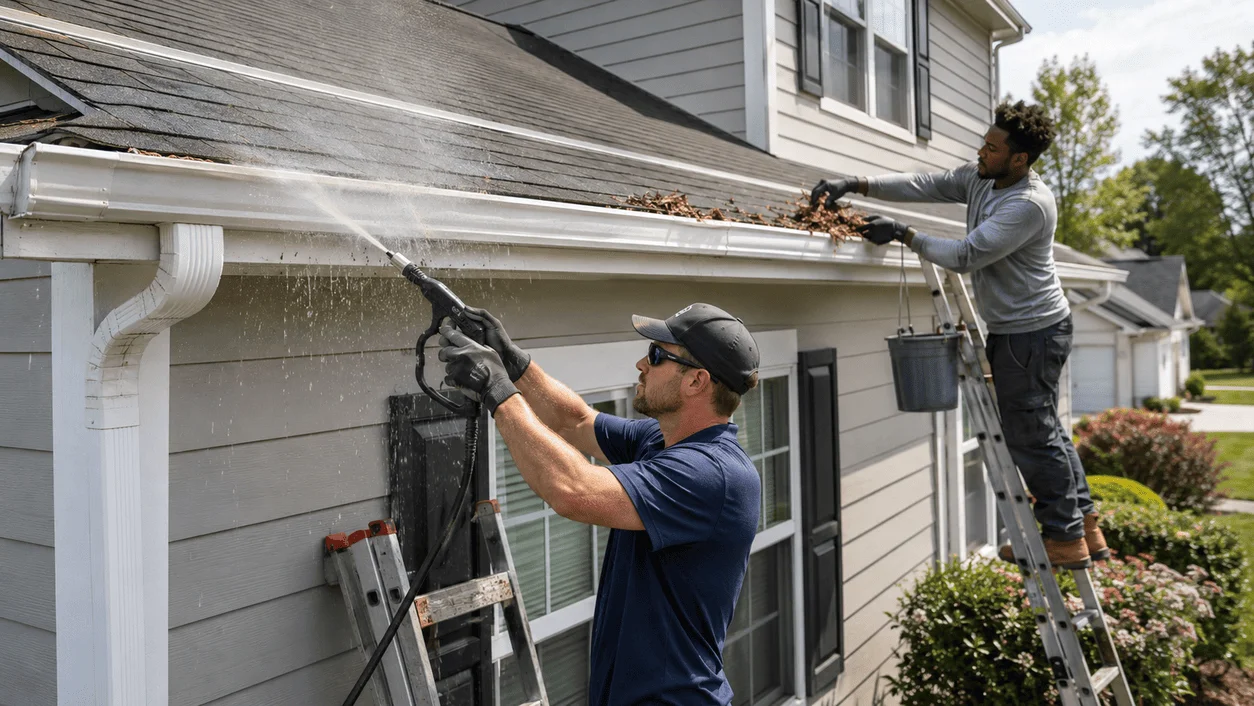
Gutters aren’t technically part of your roof, but they determine how long your roof lasts. When gutters clog with leaves and debris, water backs up under the roof edge and soaks the fascia board. Over time, that fascia rots and pulls away, giving water a direct path into your attic.
Regular gutter maintenance prevents this entirely. Our gutter brightening service not only restores the appearance of stained, oxidized gutters but also gives us a chance to spot early signs of fascia damage before it becomes a structural issue.
Moss and Algae Growth Compromising Shingles
That green streak across your north-facing roof slope isn’t just ugly – it’s actively destroying your shingles. Moss roots lift shingle edges, creating gaps where water infiltrates. Algae (the dark streaks) feeds on the limestone filler in asphalt shingles, gradually eroding their structural integrity.
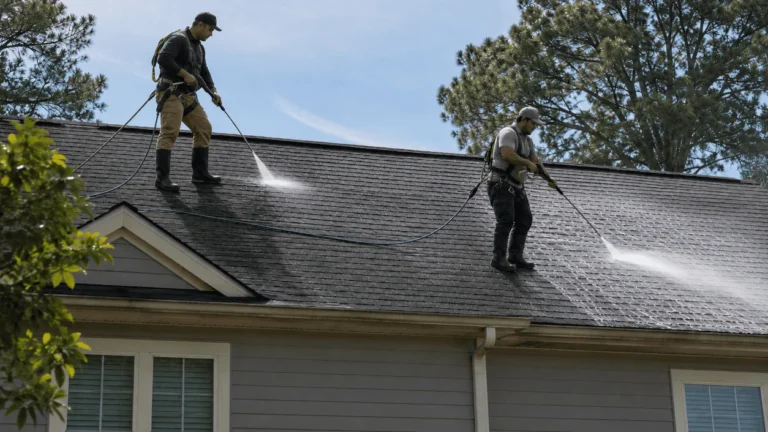
Pressure washing a roof will blast off the growth but also strip the protective granules. That’s why soft washing is the right approach – it uses low-pressure water with a biodegradable cleaning solution that kills moss and algae at the root without damaging shingles. One treatment typically keeps growth away for 2 to 3 years.
Sagging Roof Deck
If you can see a visible dip or wave in your roofline from the street, that’s a structural emergency. Sagging means the plywood decking or the rafters beneath it have been compromised by prolonged moisture exposure. This isn’t a weekend project – it requires immediate professional assessment to determine whether you need localized deck replacement or a full structural repair. Call a roofer the same day you notice it.
]]>